Monday, December 30, 2013

HAITI: REFLECTING ON THE EXPERIENCE

This video summarizes the experience of 18 people who went from Forest Hill Church to Haiti in October, 2013.  This "pilgrimage to partnership" is one more step in a deepening relationship.

Video    Haiti 2013: Forest Hill Church


Here are reflections by some of the members of the team after their return from Haiti in November.

Anne Smith

Carline Paul-blanc

Charity McDonald

Jeanette Nemcek

Jeff Smith

Joan Bacon

John Lentz 1

John Lentz 2

Laurie Logan

Paul Jennings

Rosanna Sprague

Mary Ball


Wednesday, December 4, 2013

PAUL'S REFLECTIONS ON HAITI

Paul Jennings wrote to tell friends and family about his experience in Haiti.  Paul agreed to publish his newsletter here.

Haiti Mission Trip – Paul Jennings Reflections
October 2013
Forest Hill Church

From the beginning I was wondering what to expect from this mission trip.  I assumed we were coming to help the people.  The entire trip was only 8 days in length.  I felt like maybe we should schedule more work and less tourism. A previous mission trip was conducted by FHC in the spring of 2012 to try to determine which organizations we should partner with, in order to be more effective in our attempts to help the people of Haiti.  On this latest trip we worked with a local group called the Little Brothers and Little Sisters of the Incarnation.  

When people ask, “what was it like?” so many thoughts come to mind that it is hard to decide what to say.  Haiti is the poorest country in the western hemisphere.  They suffered massive destruction in the 2010 earthquake and are still in the process of recovering from that event.  Joshua, one of our translators, told us that the majority of people in Haiti eat only one meal a day.  There are so many outside groups in Haiti trying to help, and apparently their track record is a bit mixed.  This makes it all the more important that we be vigilant in figuring out who we should be working with.

Much progress has certainly been made in rebuilding.  Visible signs of the earthquake damage have been dramatically reduced.  There are vibrant sidewalk shops everywhere, selling all types of food and other goods.  The clothing and artwork are very colorful.  There are many signs of how industrious, clever and hard-working the people are.  Although most people are walking, there are also motorcycles used as taxis and small pickup trucks with two benches and a cover in the back, that are used in lieu of buses.  Donkeys and horses are frequently used to haul things and people will often carry sizable loads on top of their head.  I suspect that this results in strong bones and very good posture!  We could use some of the health benefits of more walking, back here in the US.

We spent two days in the Port-au-Prince area.  It was quite an adventure to be driven from the airport in our van.  Due to a mix-up, it was too small, with 18 of us having to fit into a 14 passenger vehicle.  The obvious backlog of work needed on the roads gave us a whole new understanding of the term pot-hole.  The next day we rode up to the top of the mountain range south of the city and saw a very breath-taking view of the entire surrounding area with the beautiful Caribbean water and islands near the city.  We ate lunch at a Baptist Mission restaurant.  They had organized many local artisans and were selling fair trade items to help boost the local economy.  They had a variety of items including T-shirts with colorful hand painted Haitian-themed images, many wood carvings, colorfully painted metal-work items, embroidered linens, jewelry and lots more.  On Sunday we went to a church service at the Episcopal cathedral in Port-au-Prince.  The original building was lying in ruins as we worshipped in a temporary structure.  This was their first service conducted in the local Kreyol language.  Prior to that, they were always in French.  There were three separate choirs with great music.

We next drove on to the central plateau region near the city of Hinche.  The area was very green with tropical vegetation and the weather was not quite as hot due to the higher elevation.  We stayed at a very nice hotel that was built and managed by the parents of Ralph Jean-Mary, a member of Forest Hill Church.  Ralph, who was born and raised in that location, was instrumental in starting the 2010 mission trip.  He works for the Cleveland Clinic, and would have been with us this time, except that he was recently assigned to a project in Abu Dhabi.  We were hosted by the Little Brothers and Little Sisters of the Incarnation and did our work over the next five days in this area.  There were 18 of us from Cleveland, organized into 3 teams. 

The medical team mission included bringing a doctor, several nurses, and others along with some drugs and supplies to provide primary care at a rural clinic.  The team was able to serve over 400 people at the clinic.  Carline Paul-Blanc, was our team member that grew up in Haiti and is now working on her nursing degree in Cleveland.  She was like the bionic woman, doing nursing, translating, and dealing with children that were being somewhat less than “accurate” in what they said.  A nine year old boy was observing Rosanna taking blood pressure readings as he waited in line.  He finally said, “I can do that!”  So Rosanna let him try it.  And, with great attention to detail, he properly measured many other people until it was his turn to be served.  A four year old girl came to the clinic holding the hand of her elderly grandfather.  It soon became apparent that she was leading her grandfather, who was blind.  When it came time for the girl to be served, the grandfather gently grabbed the arm of our team member and said, “you be sure to take good care of my girl, now.”  Another five year old girl came in leading two younger siblings by the hand, with no adult to accompany them.  The visits to the clinic were not free.  They had to pay a small fee to the Little Brothers/Sisters that was equal to about $0.12.

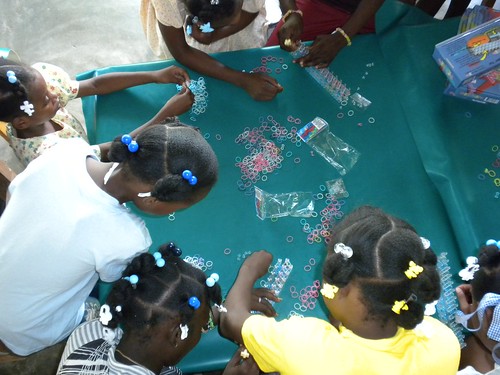
The orphanage team did a great job of planning.  Their activities included taking pictures of each child, having them decorate a frame, and bringing a printer to create the pictures on the spot.  For nearly all the children, this was the first picture of themselves that they had ever seen.  It was a colorful treasured addition to the wall of their, otherwise somewhat Spartan, room.  The team taught the children how to make bracelets on a plastic loom, and provided a number of toys and games for them to play with.  One of the girls observed the looms in action and figured out how to make the bracelets by using only her fingers.  She taught many of the other girls how to do this, as well.  The children sang some remarkable songs which truly charmed our team. 

I was part of the agronomy team and we weren’t real sure exactly what we were going to be doing. We first went to see a village that was built by the Little Brother/Sisters.  The goal of these villages is to provide housing and make them self sufficient by having gardens, chicken coops, goats, wells, latrines, etc.  We thought that we might help them build another latrine there, but problems with too much sandy soil and cave-ins did not allow us to do that.  We next went to the agronomy school and helped them by working in their gardens where they experiment with new techniques and varieties of plants.  The food they produce is used to feed the 60 students and the staff at the school.  We helped to prepare the soil, planted seeds which we brought from Cleveland, and transplanted some seedlings. We drank a whole lot of water because it was very hot!  They produce their own compost for fertility, and everything was laid out so it can be irrigated at the dry times of the year.  It was interesting to see their attention to details such as putting the seedlings on the side of the little hills in such a way that they are shaded from the afternoon sun.  They even used palm branches to retain moisture and protect seeds from the hot sun while they are sprouting.  It was very interesting to see that they were learning techniques that are much more like what we call truck farming to raise produce rather than the cash cropping that we do in the US.  We also got to suit up to see them maintaining their beehives, and observed their facilities for raising goats. 

Our most interesting interaction was a question and answer session at one of the classes at the agronomy school.  It is a two year work-study program with 6 months of classes, 6 months of a project back home, and repeating that for the next year.  We explained what was being done during our mission trip and then struggled a bit with asking, “what do you need?” followed by having them ask, “what can you do for us?”  It struck me that each of them is trying to learn how to be an entrepreneur.  We discussed this further with the professor and learned that they need training, tools, and financial support including such things as text books in French, more computer equipment for better access to the internet, bee-keeping equipment, scholarships, and access to some micro-lending for their projects. 

I am reminded of the Chinese proverb that says, “Give a man a fish; you have fed him for a day.  Teach a man to fish; and you have fed him for a lifetime.”  So I guess all of us are trying to figure out how we can help teach people how to fish.

Thank you all for your interest and your support.
Paul


Sunday, November 24, 2013

CONNECTING WITH CHILDREN THROUGH CRAFTS AND SONG

Part of the team from FHC spent four days with orphans and their teachers at the school run by the Little Sisters of the Incarnation at Pandiassou.  Team members, Deanne Lentz, Joan Bacon, Elizabeth Shaw,  Mary Ball and Anne Smith lugged suitcases full of craft supplies and a portable printer.   Their heads were packed with projects and ideas for partnering with children and teachers in a creative binge.


After a hesitant start on the first day, things picked up and excitement built.  By the last day all the children had a framed photograph of themselves -- for many, a first portrait of their very own.


There were bracelets and other adornments, drawings, collages and memories left behind.


--kjl


Sunday, November 17, 2013

PRIORITIZE THE POOR AND WORK WITH THEM

I found this article to be in line with what we have heard from some of the people we met in Haiti.  It is a perspective that I saw working in Haiti Outreach's clean water development work. --kjl

Mennonite Weekly Review Logo

Nov. 11 issue


We can’t forget Haiti

By Theo Sitther
The story of Haiti is one of survival in spite of tremendous odds. Mennonite Central Committee partners there often put their analysis of Haiti’s current situation in a historical context.

The story begins in 1804, the year of Haiti’s independence from French colonization and slavery, and the establishment of the first black republic. But the United States, France and Spain, fearing slave rebellions in their own countries and colonies, punished Haiti with trade embargoes. Over the years, hardship continued, with multiple U.S. military interventions, the accumulation of debt by dictators and unjust trade and economic policies throughout the 1990s.

Even the impact of the 2010 earthquake, a natural event, was made far more disastrous by human factors. Many farmers had migrated to cities like Port-au-Prince because they could no longer make a living — due in part to the cheap imported rice from the United States.

However, response to the 2010 crisis presented an opportunity for change.
MCC and other groups continue to work on ensuring that the people of Haiti are included, involved and consulted throughout the processes of relief, reconstruction and development. Our contribution to the recovery is small, but being informed by local priorities is effective.

International actors and policymakers rallied in support of Haiti, pledging billions of dollars in aid. U.S. officials who were put in charge of relief and reconstruction promised to “build back better.”
Now almost four years later, this goal seems like a distant memory. The rallying cry of the international community sounds more like a whimper.

Haitians wonder what has happened to the billions of dollars in aid that were pledged. Even though millions of dollars have been spent, many Haitians continue to experience poverty.
Nearly 300,000 people continue to live in tent camps. Many are living in so-called transitional shelters. Those who are still living in tents have few options for finding a permanent home.

U.S. aid in Haiti has tended to focus on private-sector industrial growth rather than direct support to earthquake victims. Millions of dollars have been spent on an industrial park in northern Haiti. These types of investments are supposed to create jobs for the Haitian people. But it is unclear how low-wage factory jobs that pay up to $5 per day will allow Haitians to support their families, much less raise the standard of living.

MCC’s partners in Haiti call for a development approach that prioritizes the most vulnerable and holistically addresses the population’s needs. For example, the 300,000 people living in tents deserve to have one of their most basic human needs — dignified housing — met. More resources should be devoted to such needs.

The U.S. and other international actors in Haiti should be more transparent and consultative with Haitian civil society when carrying out development projects. When Haitians themselves are in control and at the center of the rebuilding process, U.S. aid efforts will be far more effective. See washington.mcc.org/advocate/alerts to learn about advocating for aid accountability in Haiti.

Haiti’s story can go beyond mere survival to a country that thrives and prospers. The Book of Proverbs says wisdom “walks in the way of righteousness, along the paths of justice” (8:20). Wise policies for Haiti will foster justice by focusing on the most vulnerable.

Theo Sitther is senior legislative associate for international affairs in the Mennonite Central Committee U.S. Washington Office.

Tuesday, November 5, 2013

GROUP PORTRAIT

Photo by Zo
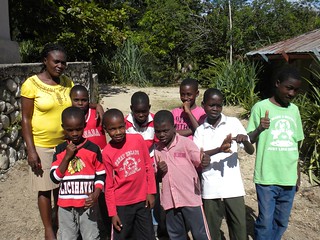
This is the portrait of the group I call Haiti 2013.  It was taken on our way home.  The man to the far right is one of our drivers.  Above us all in the tree, appropriately, is Carline Paul-blanc.  


Carline in her native land


Monday, November 4, 2013

BASSIN ZIM

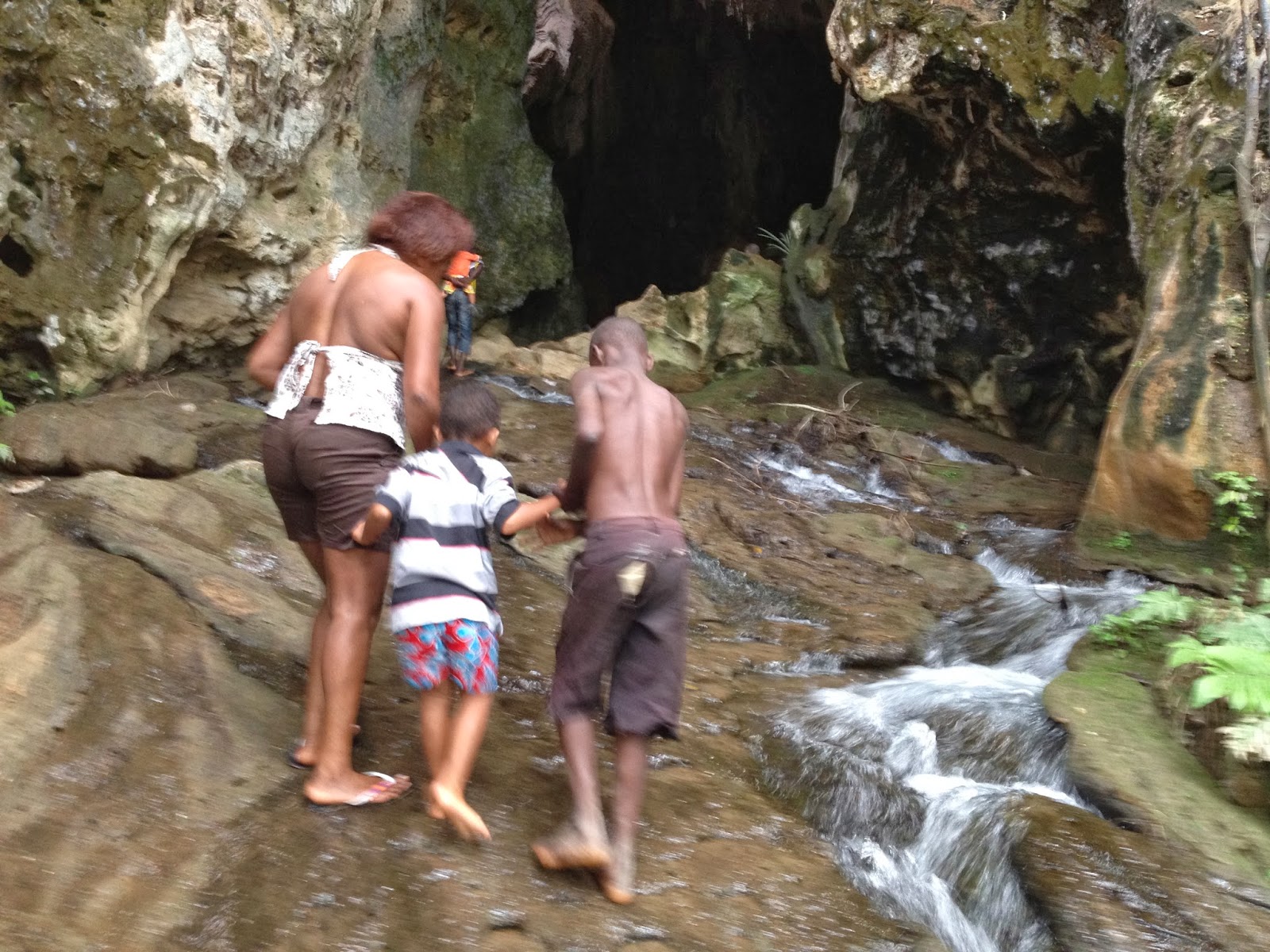
Bassin Zim is the name of a beautiful waterfall that Haitians around Hinche prize and promote as a tourist attraction.  Take a look.

Our group made the short trip from Hinche to the falls the day before we headed home.  That Friday was a national holiday, so Neil Van Dine and his family came from Pignon to meet all of us there and to deliver me back to my FHC companions.


Some set up chairs and soaked in the beauty and sound of water falling down rocks into a pool.  The more nimble scrambled up slippery slopes and across streams to the grotto above the main falls.  Crowds of youngsters eagerly offered to be personal assistants to help us navigate the treacherous route up.

The grotto at the top is an interesting spot where voodoo ceremonies are sometimes held.  
It is not hard to imagine that at night with only torches for light the grotto would be really spooky. 

Well into the grotto, some of the graffiti is very ancient.  It needs to be protected from the contemporary graffiti that thoughtless tourists post.  


There is a concern that as more foreign tourists come to Bassin Zim, the falls and the grotto need more management to prevent abuse.  I hope it doesn't get too commercialized and lose the intensity of its natural beauty combined with the aura of mystery and spirituality.


Bonus:  For an entertaining video to promote tourism to Bassin Zim, click on this link.

--kjl

Wednesday, October 30, 2013

COMMUNITY CAPACITY BUILDING IN HAITI

October 29-30.  Nothing changes more often than plans here in Haiti.  It was decided Tuesday that I would go with Rose Carmelle, a person whose job we would describe as a community organizer, to two villages where local community members are preparing to take responsibility for their community well and its operation.

The compelling need and the opportunity for a village to have a well and clean water of its own sets the table for the more critical task of coaching villagers, mostly illiterate, in the techniques of organizing for permanent management responsibility.  The well and clean water is a recognized need while the development of the local civic capacity to manage responsibly is not a need well recognized here in rural Haiti.  The concept, as well as the method, of responsible, transparent management is totally lacking.  As a result, the material resources directed to local communities are not well-used or sustained. We patrons of the poor in Haiti have trouble dealing with this.  We see a need and respond to the visible need without regard to the less visible need for an organized management structure based in the community to make sure wells, schools, medical clinics, tree farms, etc. are serving their community over the long haul.  That is what sustainable community development is all about -- building management capacity along with new community assets.


In this little church near St. Raphael, Haiti meetings are held regularly to prepare the way for a community well.  I was there twice this week.

These people, along with their community organizer, are are getting ready to govern the maintenance and use of the well and of the water according to their own enforceable regulations.

These children are among the hundreds of people who need this well and clean water.  

If there is to be a well that works for this community permanently, it will depend on a community management council with the capacity to operate it permanently.  That's the story from Haiti Outreach.

--kjl